Investigation and missions
Objectives, requirements and consequences connect exploration with new clues, documents and narrative paths.

Project progress
The game already exists. The next challenge is completing its production.
Totana 1578 has an operational technical and playable foundation: the monastery can be explored, missions structure the investigation, and objects, states, minigames and accessibility systems form part of the same experience.
3D production and illustrated narrative development are already under way. Funding will allow this work to expand, complete the remaining content and reach the artistic, audio and accessibility standards planned for the final version.
A working foundation
The technology is used every day to build and test the game. Current development combines established systems with ongoing visual production and narrative adaptation.
Visual production in progress
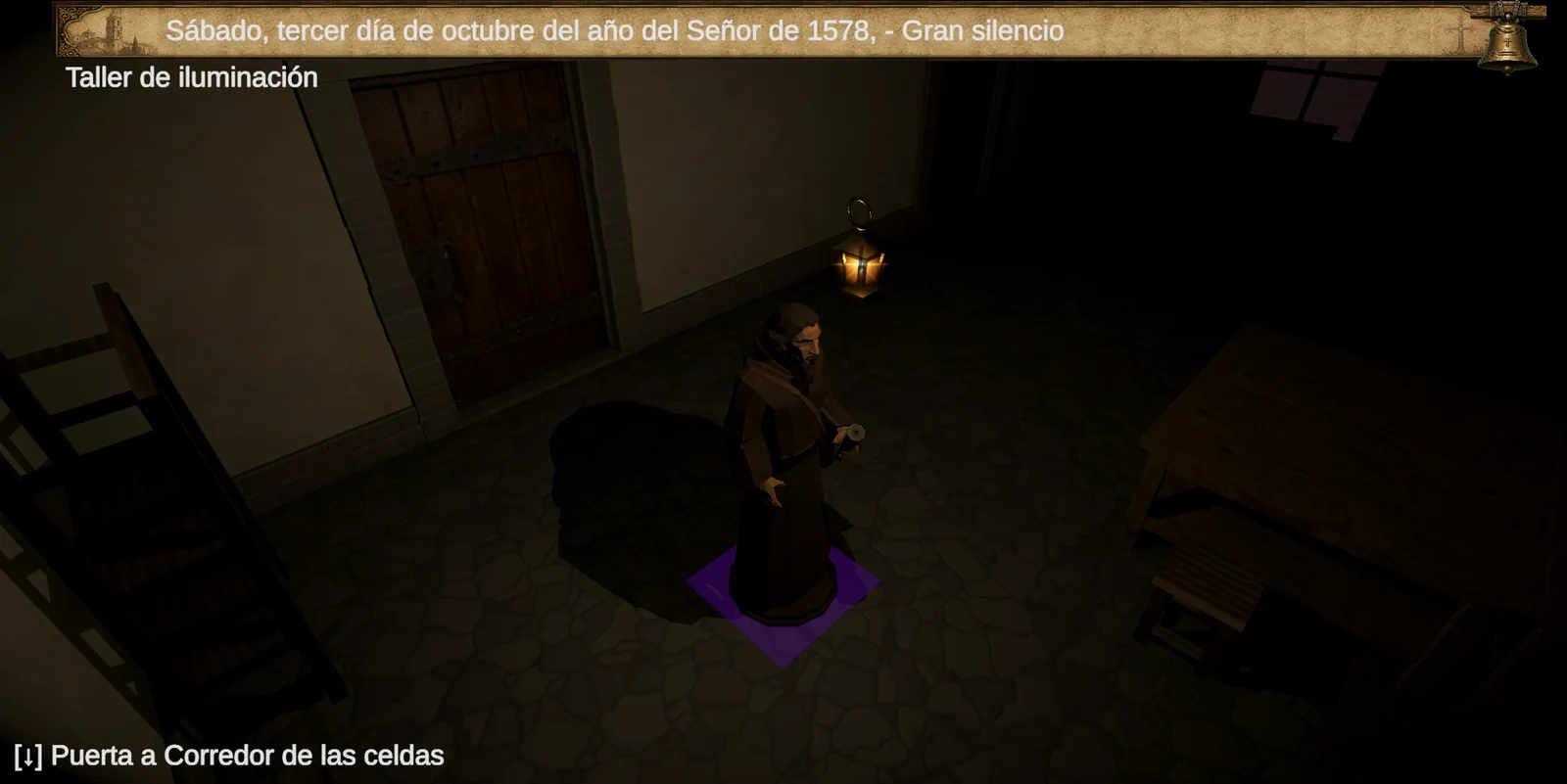
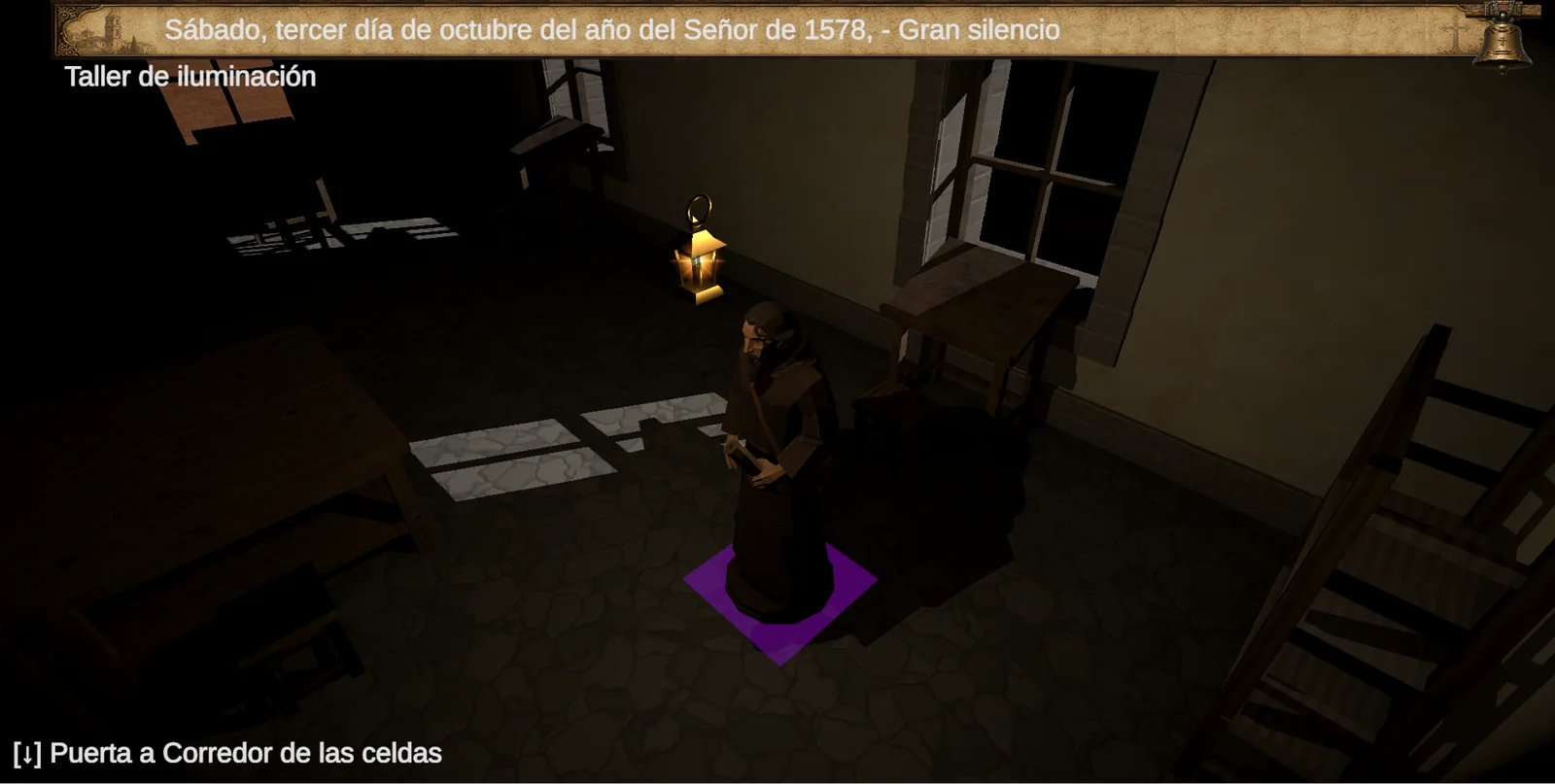
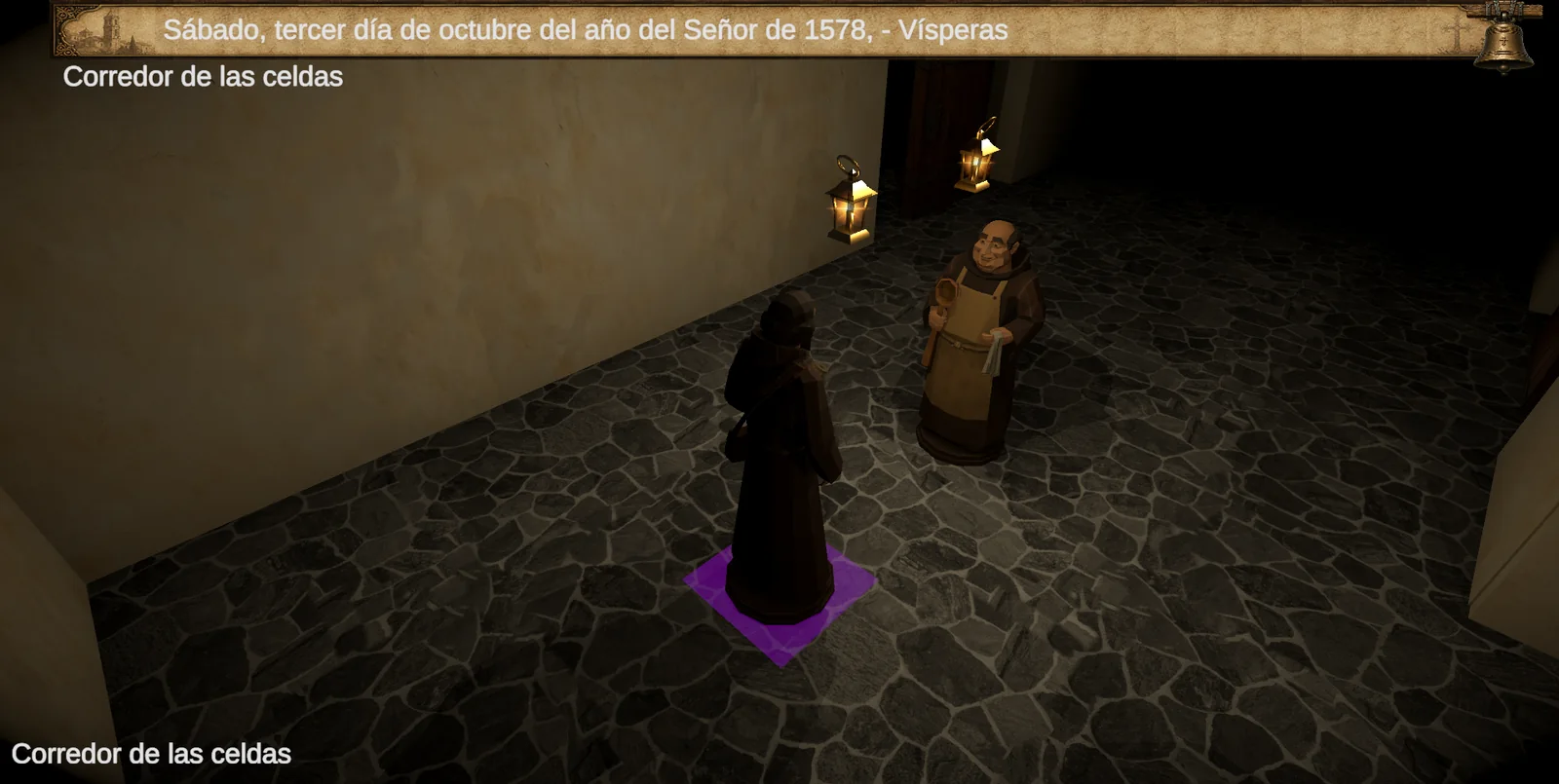
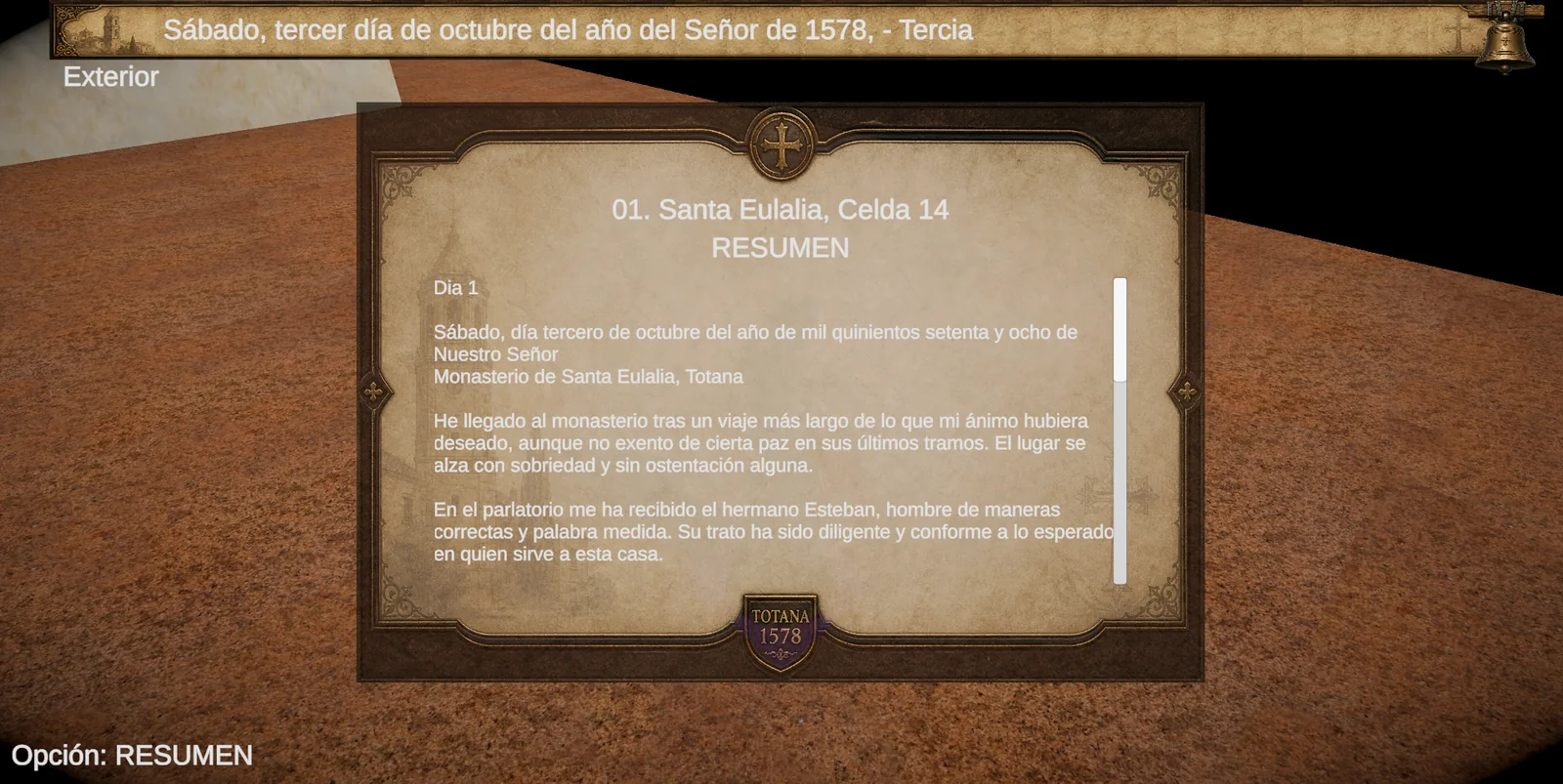
These images come directly from the current game build and show environments, characters, lighting and interfaces already integrated into the project. They represent work in progress and may evolve before the final version.
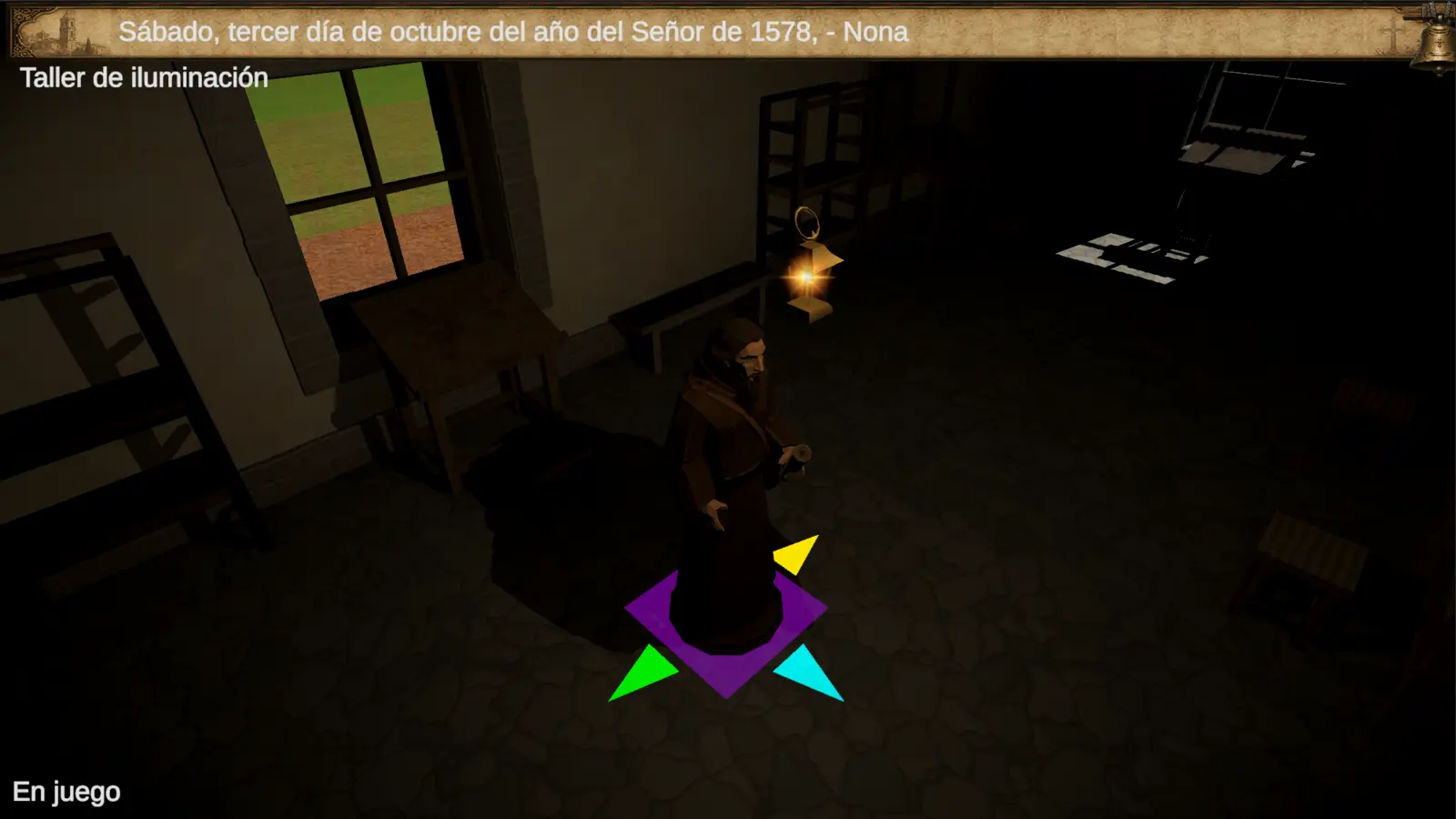
Integrated accessibility
The purple tile identifies the character’s position, while coloured directional indicators bring essential orientation and action information onto the screen.
These elements belong to the real game. Visual information complements sound-based orientation so that the experience does not depend on a single sensory channel.
Visual narrative
Some events in Totana 1578 will be told through illustrated narrative sequences integrated into the videogame. They are not consecutive pages from a conventional comic: each composition condenses a specific scene and selects its essential visual moments.
This test shows how an illustrated page can be transformed into an audiovisual sequence. The camera moves through Cormac’s family, the inn where he grew up, the travellers and the stories that awakened his curiosity and eventually led him to investigate their origins.
Demonstration version without narration. In the final edit, framing and movement will be synchronised with voices, ambience, effects and music.
Technology and content
The purpose of funding is not to begin development, but to complete a work that can already be played, tested and expanded on solid foundations.
Objectives, requirements and consequences connect exploration with new clues, documents and narrative paths.
Many of the challenges are already designed, implemented and tested within the mission flow.
Editors, catalogues, validators and internal systems support content production without rebuilding the main codebase.
Movement, navigation, interaction, objects, persistence and permanent changes in the game world.
Tasks, conditions, decisions and dynamic consequences that structure the investigation.
Ambient and spatial sound, orientation and accessibility tools adapted to the isometric environment.
Mission editor, object catalogue, localisation, validators and internal utilities.
Next stage
Work continues, but turning this foundation into the final version requires larger, coordinated teams for art, sound, voices, accessibility, integration and testing.